One Last Ride
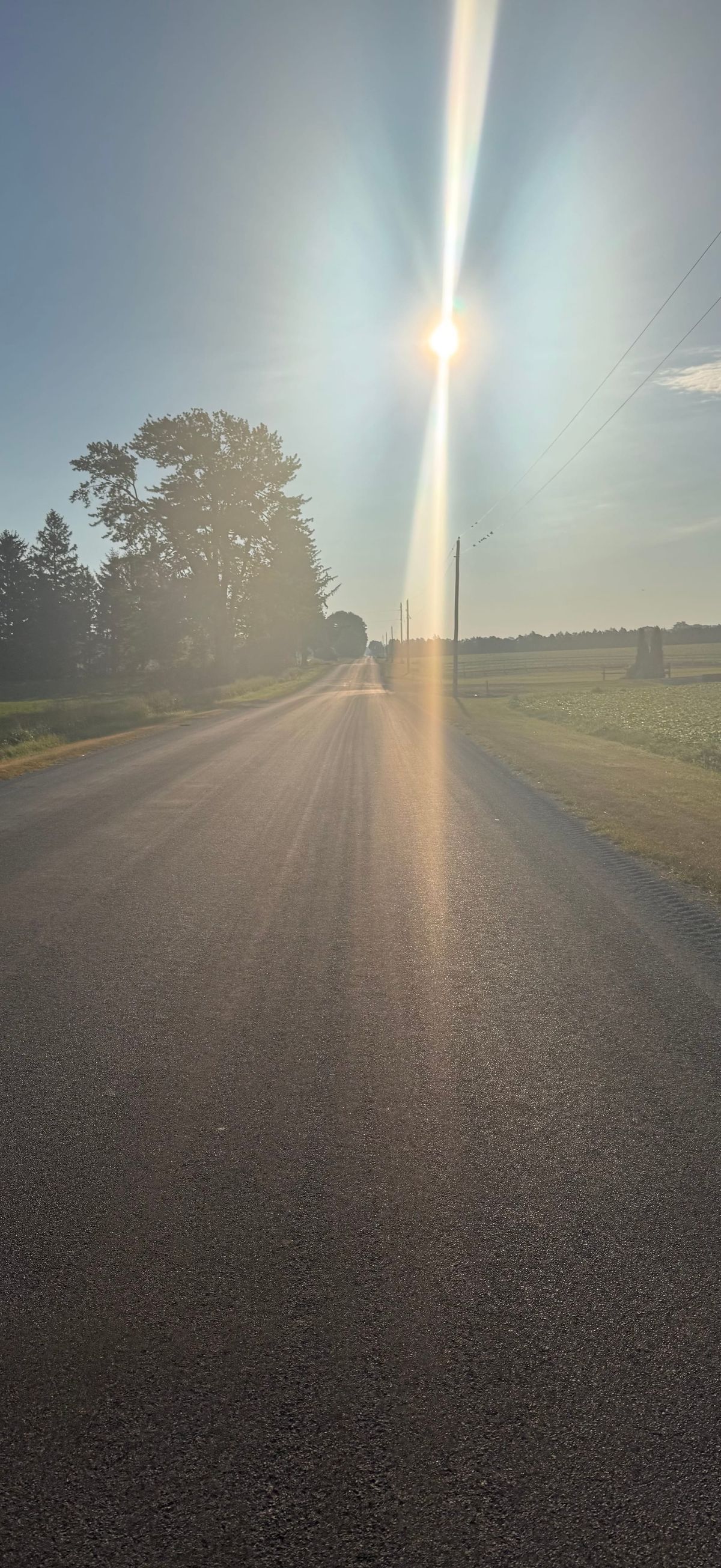
Saturday I did something I almost never do. I rode a 200 km brevet completely alone.
The Waffle starts on Thursday. At 1,200 kilometres, it will be the longest ride I've ever attempted, the culmination of four seasons spent slowly working my way through longer and longer brevets.
There are faster ways to prepare for a ride like this. Fred and I ignored all of them. We chose the scenic route instead: dozens of events, a few questionable decisions, and enough gas station food to make a nutritionist stare quietly out a window.
So why ride alone now?
Anyone who's read my ride stories knows it's not because I don't enjoy riding with other people. Long-distance cyclists are wonderful company, provided your standards for normal conversation include debating butter tarts, discussing the aerodynamic properties of plastic butts, and spending twenty minutes trying to convince a McDonald's employee that there was, in fact, nobody in the drive-thru.
Before a ride like the Waffle, though, I need one long day by myself.
Riding alone reminds me what belongs to me: the navigation, the pacing, the nutrition, all the little decisions that determine whether a long ride becomes a good day or a very long walk. Every brevet is ultimately your own ride. Sometimes it's worth remembering that before you share the road with everyone else.
A good group has a rhythm of its own. Someone notices you're overdue to eat. Someone points out the next control. Someone takes a longer pull into the wind because today their legs are a little better than yours. Before long, you're doing the same for someone else.
That's one of the things I love most about long-distance cycling. We spend the day carrying little pieces of the ride for each other.
Ride with other people long enough, though, and it's surprisingly easy to let them carry a little too much: you stop noticing the next turn yourself, you assume someone else is watching the clock, and one day you realize your bottles have been empty for an hour without noticing. None of that is wrong. It's one of the pleasures of riding in a good group. It just isn't something I want to discover about myself halfway through a 1,200-kilometre brevet.
A solo ride has very little to do with fitness. By this point in the season, I know I can ride my bike for a long time. That's reassuring, but it isn't what I'm trying to learn. What I'm really testing is whether I can still manage my own ride when nobody else is managing little pieces of it for me.
Can I remember to eat before I'm hungry instead of after I've become strangely interested in lying down beside a field of soybeans?
Can I keep drinking when the weather is cool?
Can I stay patient when the route gets monotonous, the headwind settles in, and the only voice I hear for the next hour is the one in my own head?
People imagine long-distance cycling as an endless physical contest. Mostly it's logistics. The riding is the easy part. The hard part is remembering that future Michel eventually has to live with whatever present Michel decides to skip. Every forgotten snack, every missed water stop, files its report a few hours later.
Nobody applauds because you remembered electrolytes. There's no Strava badge for stopping before you're dehydrated. But those unglamorous habits are what keep a ride moving once the novelty has worn off and the finish is still a long way away.Riding alone reminds me that nobody else can own those decisions for me.
Of course, riding your own ride doesn't mean refusing help.
Natalie once rescued my frozen biscuits from a freak snowstorm during a 200-km December ride. If your first question is what I was doing riding a bicycle through a snowstorm in December, I should warn you that I probably can't explain it in a way you'll find persuasive. It made perfect sense at the time, which, in hindsight, should probably have been my first clue.
I've waited while friends fixed flats. Friends have waited for me. We've shared tubes, lights, food, stories, and the occasional bad idea. That's part of the quiet social contract of randonneuring. You stop. You help. You make sure everyone still has a chance to finish.
The point isn't to prove I can do everything alone. It's to remember which parts are mine.
When I roll away with a group, I don't want to unconsciously let someone else manage my day. I want to take my turn into the wind. I want to notice when someone else has forgotten to eat because I haven't forgotten myself. I want to arrive with enough left, physically and mentally, to carry a little piece of the ride for someone else.
Oddly enough, riding alone once in a while is one of the things that makes me a better riding partner.
On Thursday, sixteen of us will roll away from Chatham before sunrise. I hope I spend most of those 1,200 kilometres with friends. I hope we trade stories, share the wind, and solve the important questions, like whether butter tarts are a legitimate endurance food.
But long rides have a way of stretching people out. Some riders stop a little longer at a control. Others ride ahead. Night falls. Before long, everyone is riding their own ride again.
Maybe I'll spend an hour alone. Maybe six. When that happens, I won't be wondering whether I can manage the route, the solitude, or the thousand small decisions that make a brevet work. I settled those questions last Saturday. Then, when the road brings us back together, as it usually does, I'll be ready to carry my share of the ride.